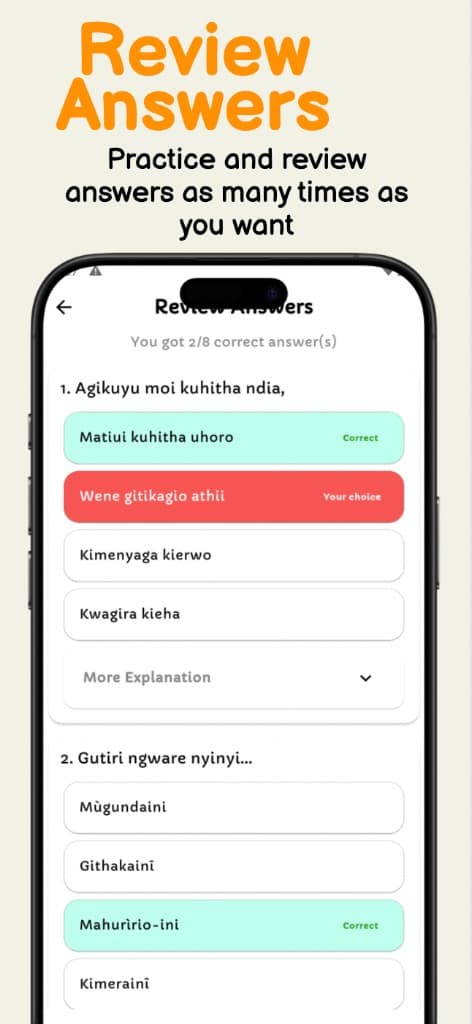
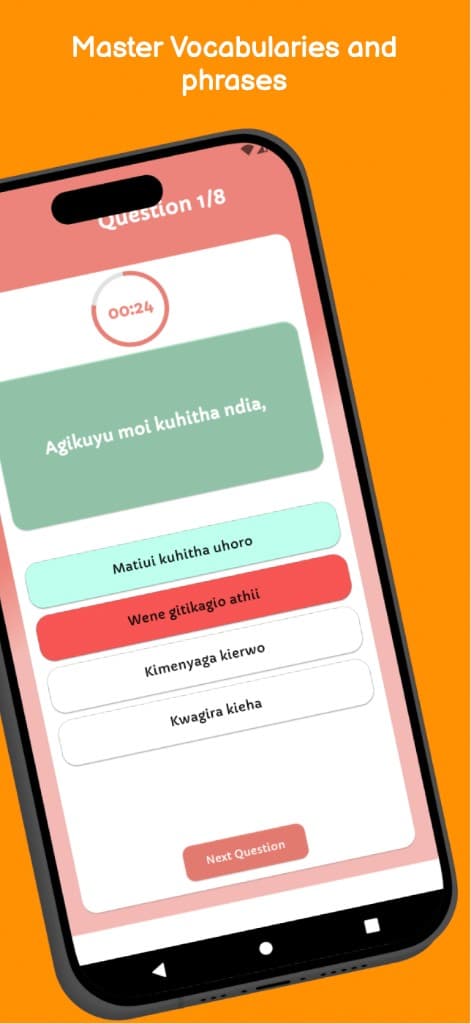
More than Gĩkũyũ alone. Kanyoni keeps African languages alive through trivia, audio, proverb practice, and cultural reading—and that same path is opening to more languages across the continent.
Kanyoni Africa exists to preserve, celebrate and modernize Gĩkũyũ culture for future generations. We believe technology can become a bridge between our ancestors and our children.
“If you know all the languages of the world and not your mother tongue, that is enslavement. If you know your mother tongue and add all the other languages, that is empowerment.”
Living culture
Technology as a bridge between ancestors and children.
Voices
What people are saying
“My grandmother explained my name, but Kanyoni helped me understand its history.”
Heritage learner · Diaspora
“I finally discovered why my family carries our surname.”
Family historian · Nairobi
“Kanyoni made me proud of my heritage.”
Culture enthusiast · Global learner
Mobile app
Carry Your Heritage Everywhere.
Search names, explore culture and learn Gĩkũyũ anytime.
Newsletter
Stay Connected to Your Roots.
Receive weekly stories about Gĩkũyũ culture, names and history.
Heritage & tongue preservation
Learn Kikuyu.Reconnect With Home.
Every name, every proverb, every story carries the wisdom of generations. Kanyoni Africa helps you reconnect with your roots through language, history, names and living culture.
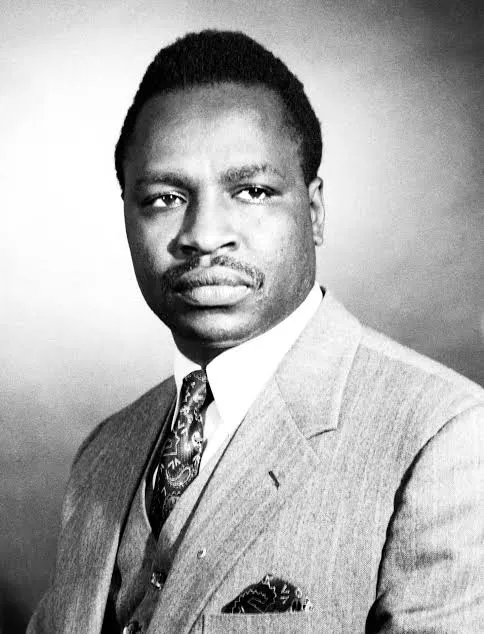
In the 70s, Kenyans had become increasingly frustrated with a government that had lost touch with its people. In the wake of rising corruption, high unemployment and state impunity, they began to turn away from the established leaders of the time.
In their search for a “better deal”, their hope centered around a young, progressive and charismatic leader who had come to embody their calls for change.
His name was Josiah Mwangi “J.M” Kariuki, a leader who, before his life was tragically cut short, briefly held the potential of becoming Kenya’s next president.
Here are six things that you might not have known about him.
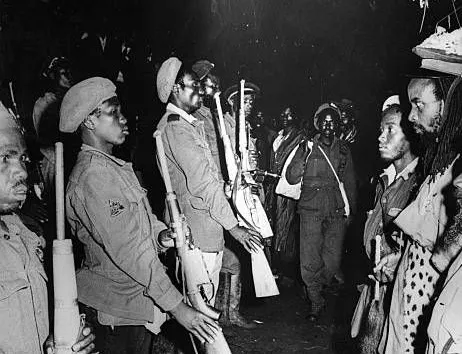
The Council of Freedom or Kîama Kîa Wîathi (KKW) was formed and met at Kiburi House. This was the group that organised and dictated the moves of the Kenya Land and Freedom Army. It included Kungu Karumba, Fred Kubai and Bildad Kaggia- 3 of the famous Kapenguria Six. There was also Chege Kibachia, who was first arrested and deported to Seychelles for organising the Uplands Bacon Factory Strike, which ended in bloodshed. After his release, he was mentioned as one of the organisers of the Lari Massacre, the worst bloodletting episode in the Maumau War.
In Maumau General Waruhiu Itote, aka General China, speaks on the activities of the Council. Having joined the Anake a 40 group in 1947, China received his MauMau oath in Naivasha in 1950. Back in the city, he was a fireman by day and a revolutionary by night. As a member of the Transport and Allied Workers Union, he had a proper insight into the activities of the Committee that convened the KKW.
The Nandi tribe are a section of the collective Nilotic agro-pastoralist communities referred to as the Kalenjin. Other subgroups include the Tugen, Keiyo, Marakwet, Kipsigis and Sabaot. As these tribes settled into the Western region of present-day Kenya, they inevitably found themselves in a crucible of war with the neighboring communities. In the 1700s and the 1800s, the Nandi fought their neighboring tribes with varying success until they distinguished themselves as the undisputed victors of the North-Rift Region.
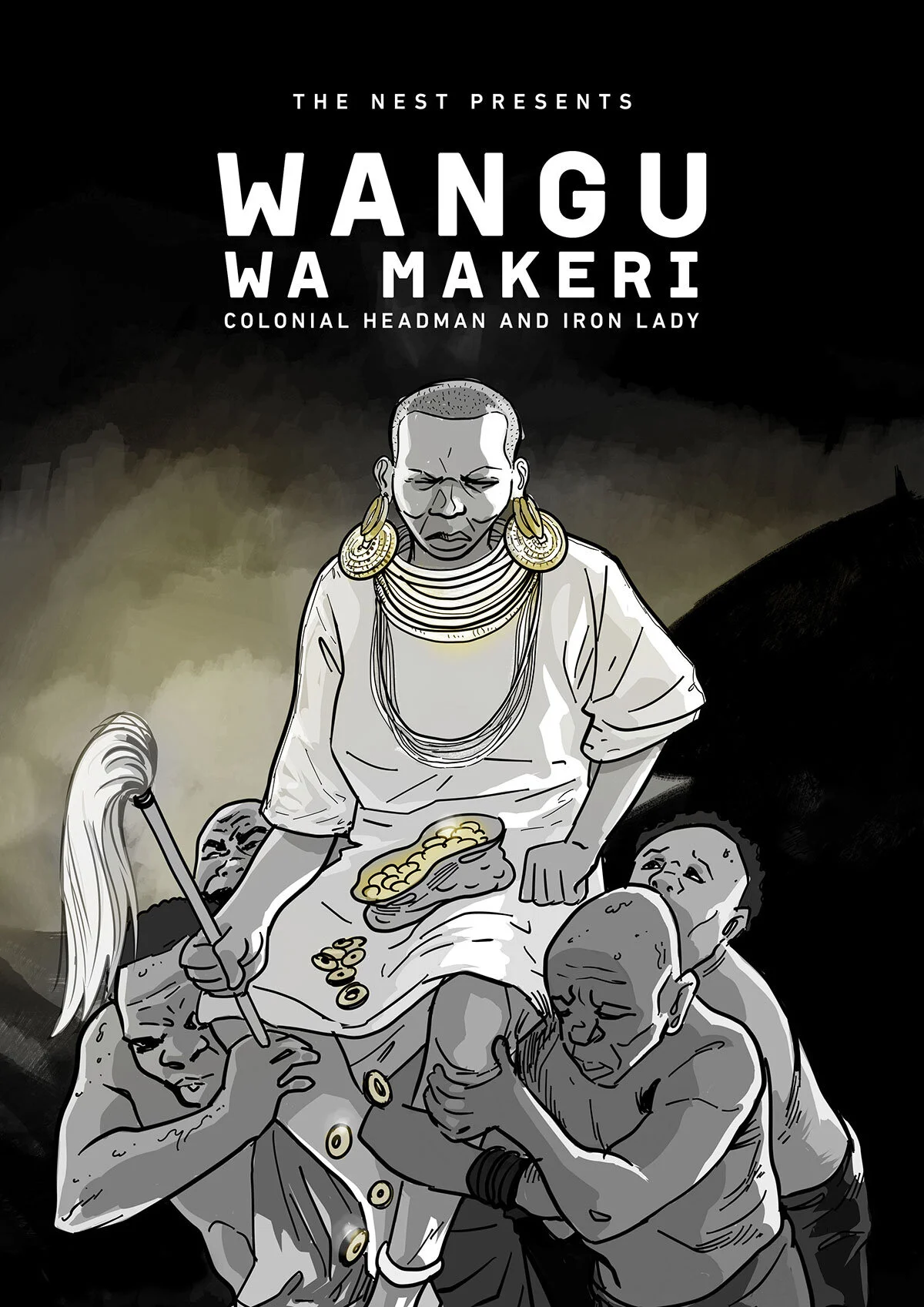
Wangu is very easy to dislike as a story character, considering the ways in which women are expected to be pleasant, well mannered, beyond moral reproach, yielding and submissive. She was however a functional headman, for all intents and purposes, in as far as wielding power and collecting taxes. That can never be read as a good thing, especially by a people suffering the violence of colonisation. And yet, Karuri wa Gakure in history, who literally recruited her for this job and amassed wealth and influence because of his relations with the British, retains a name that Wangu does not.
I am highly interested in language. The possibility of using words to express ideas fascinated me from the beginning. People use similar words, but they mean different concepts. Or they use different words, but they are talking about the same ideas. Language isn’t straight forward, such as mathematics or computer science. Its not constructed, although it has it’s definitions. In terms of its syntax, semantics and the meaning of its words, which are the fundamentals for learning every language.
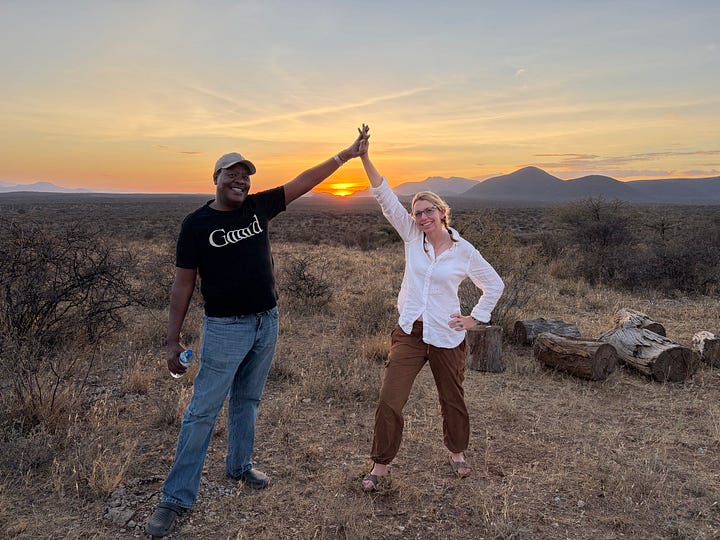
We finished up our time at Samburu and drove to Ol Pejeta today. A few minor inconveniences/delays, which I of course arranged so that the guests would get a more authentic African experience.
Before I get to that, a few more Samburu notes. This time, I’ve decided to earn my keep a little bit more and give a few lectures on Kenyan history, politics, and culture. I gave the group a book list in advance, and most of them are actually reading the key one, Michaela Wrong’s It’s Our Turn To Eat, the story of a whistle blower in the Kibaki government (2003-2013) who blew the lid on a major corruption scandal. Wrong uses that story to delve into Kenya’s history and politics more broadly. Excellent read.
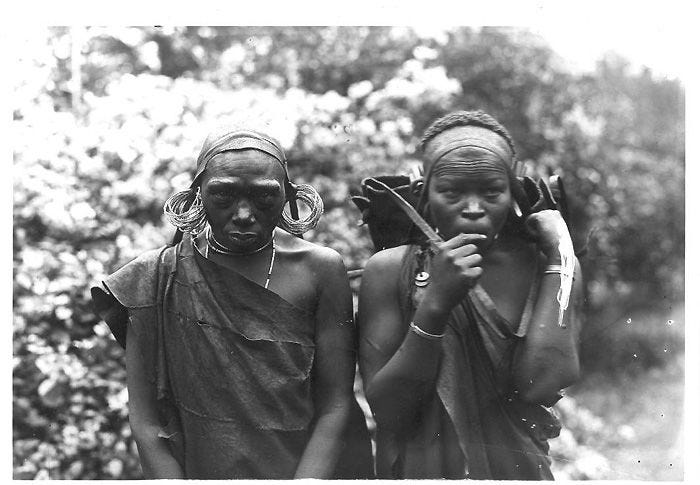
There have been recent debates about the Kikuyu and their sources of wealth. Many believe Kikuyus are generally entrepreneurial in nature which makes them good in business and money matters. There’s even a popular stereotype that suggests Kikuyus love money and that they’ll even steal or murder to get it. Even though I am not sure whether popular beliefs about Kikuyus being murderous are true, I am inclined to believe some of these stereotypes are real. Recent research suggests most stereotypes are fairly accurate even though mainstream psychologists and sociologists deny them. Are stereotypes of the entrepreneurial Kikuyu true or could their sources of wealth be explained by other phenomena?
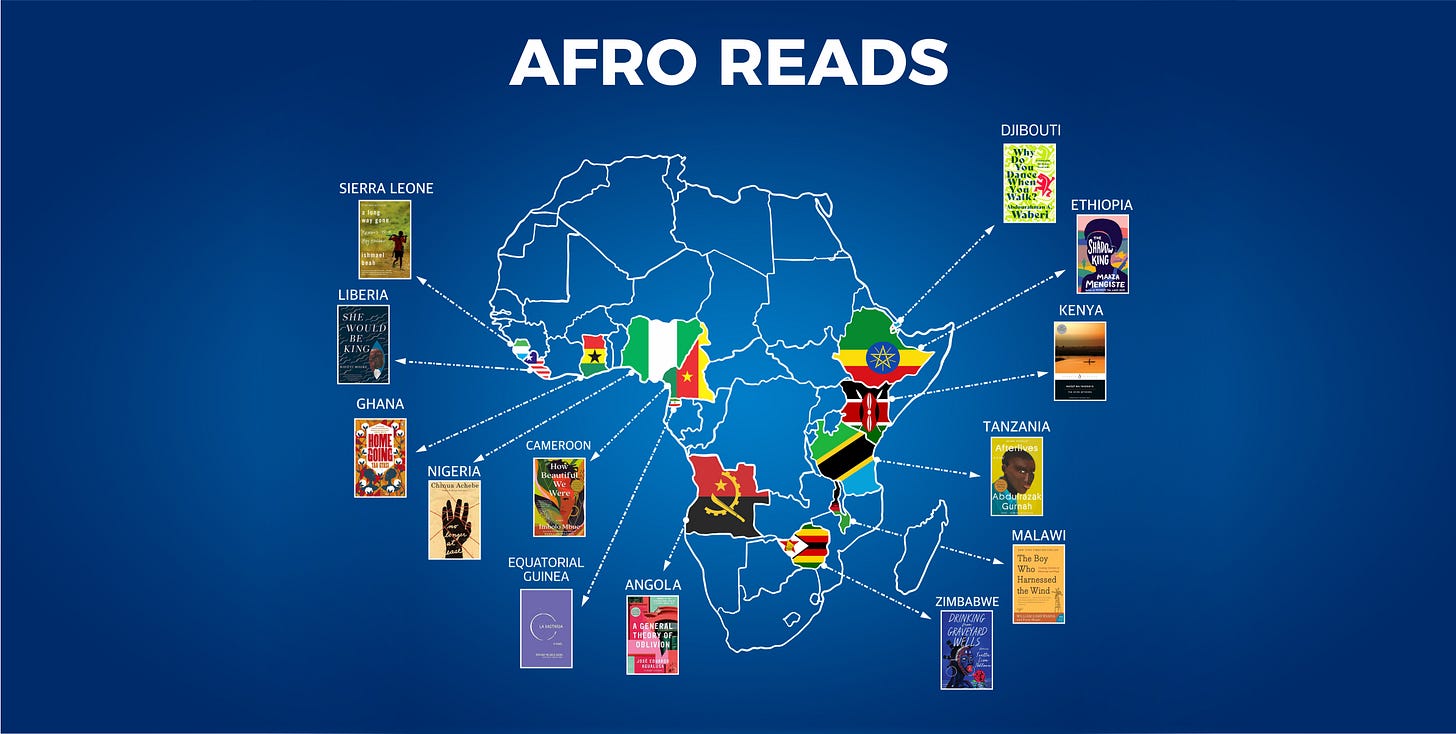
Afro Reads is making its way across the continent! This our 8th country out of the 54. Below is a sneak peek of potential books that will be read and reviewed. For those who are just joining, please check out the former reviews, my bookcast, and consider joining us for our community reading via Substack in July!!